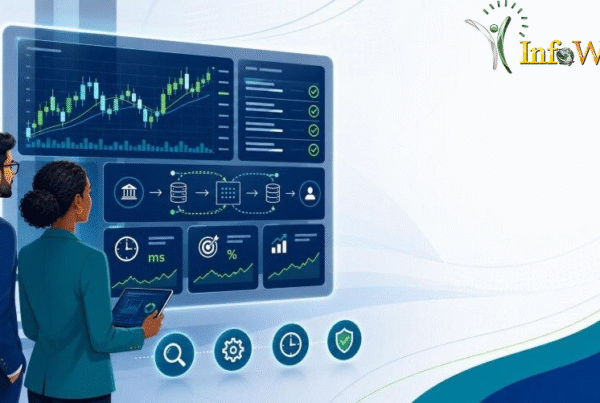

Today’s investment landscape is more diverse than ever.
A typical investment portfolio may contain equities, bonds, treasury bills, mutual funds, commercial papers, money market instruments, and alternative investments—all managed simultaneously across different markets and currencies.
While diversification helps reduce risk and improve returns, it can also introduce a significant operational challenge: fragmented portfolio management.
Many institutions still rely on multiple systems, spreadsheets, and disconnected workflows to manage different asset classes. As portfolios grow in complexity, this approach becomes increasingly difficult to sustain.
The question is no longer how many assets an organization manages.
The question is whether its technology can manage them efficiently.
The Growing Complexity of Modern Portfolios
Investment managers today are expected to provide accurate reporting, real-time portfolio visibility, regulatory compliance, and timely decision-making.
At the same time, they are managing:
- Equities
- Bonds
- Treasury Bills
- Commercial Papers
- Mutual Funds
- Fixed Income Instruments
- Multi-currency portfolios
Each asset class comes with its own valuation methods, reporting requirements, and operational processes.
Without a centralized platform, investment teams often spend more time reconciling information than analyzing opportunities.
The Hidden Costs of Managing Multiple Systems
Using separate platforms for different investment products may seem manageable initially, but over time it creates operational inefficiencies.
Some common challenges include:
Data Inconsistencies
When information is spread across multiple systems, maintaining data accuracy becomes more difficult.
Teams often spend valuable time verifying figures instead of focusing on investment decisions.
Delayed Reporting
Generating portfolio reports from different sources can be time-consuming.
By the time reports are consolidated, the information may already be outdated.
Limited Visibility
Decision-makers need a complete view of portfolio performance.
Fragmented systems make it difficult to understand overall exposure, risk concentration, and asset allocation.
Increased Operational Risk
Manual processes and duplicate data entry increase the likelihood of errors.
Even small mistakes can have significant financial and regulatory implications.
Why Centralization Matters
A unified portfolio and funds management platform allows organizations to manage multiple asset classes from a single source of truth.
This provides:
Better Visibility
Investment teams can monitor portfolio performance, exposure, and allocation from one platform.
Faster Decision-Making
With accurate information available in real time, managers can respond more quickly to market opportunities.
Improved Efficiency
Automation reduces manual processes and frees teams to focus on higher-value activities.
Enhanced Compliance
Centralized data improves reporting accuracy and supports regulatory requirements.
The Future of Portfolio Management
As investment portfolios continue to expand across asset classes and geographies, the need for integrated portfolio management solutions will only increase.
Organizations that invest in scalable, centralized technology are better positioned to improve efficiency, strengthen governance, and deliver superior investment outcomes.
Managing multiple asset classes should not require managing multiple systems.
The future belongs to firms that can simplify complexity while maintaining complete visibility across their investment operations.
Final Thoughts
Technology should enable investment teams to focus on strategy, performance, and growth—not administrative complexity.
As portfolio management becomes increasingly sophisticated, organizations must evaluate whether their current tools are helping them scale or holding them back.
The most effective investment operations are often the simplest: one platform, complete visibility, and smarter decision-making.